Black Friday & Cyber Monday 2026: The 4-Week Dropshipping Game Plan
This year Black Friday falls on November 27th with Cyber Monday following on November 30th. There are four weeks to go and, although this may be the first you have heard of the event, that is plenty of time to get something together, as long as you don’t spend it in a state of panic trying to do everything at once.
Unlike most other Black Friday guides on the net which assume you have been preparing since summer, this guide is aimed at the seller who is starting today. Each week you will have one job to focus on: sort out your offers and margins, sort out the pages you will be sending traffic to, sort out your fulfillment and practice your launch. Simple and no fluff!
Looking for more products worth discounting? Start with our Christmas product picks for 2026 or brush up on finding products with high profit margins first. Then come back here and plan the month.
Black Friday 2026 Dates to Circle on Your Calendar
For consumers, the whole weekend can be viewed as one long promotion. Plan your campaign as a single campaign with two peaks.
- Thanksgiving (US): Thursday, November 26. Shoppers browsing from the couch do not yet convert to buyers.
- Black Friday: Friday, November 27. The main event.
- Small Business Saturday: November 28. Natural angle for gift guides and brand stories.
- Cyber Monday: Monday, November 30. The last of the big days and best online offers.
Interestingly the supplier’s pre-Christmas delivery cutoff date is also crucial to know. Anyone ordering gifts in late November will want these with them by December 24. All promises made on delivery times in the run up to Christmas will rely on you confirming the supplier’s processing times with them.
Another thing to know before you plan discounts: shoppers compare prices for weeks before the sale. By Black Friday, many already have a shortlist. Your job in November is to get your store on it, which is why the weeks below are ordered the way they are.

Week 1 (October 30 to November 5): Figure Out What You Can Afford to Discount
The most expensive Black Friday error of all? Slashing a marginal product by 40% when it could only sustain a 10% cut. Before marking up prices on your Black Friday flyer, calculate the net profit from a single order of each offered product.
- Product cost plus shipping to your main markets.
- Payment processing and platform fees per order.
- Use your actual recent campaign numbers for your realistic ad cost per order, rather than your best day ever.
- A refund allowance is made for a few percent on most orders, more on items that have various sizes.
A Quick Example, With Real Numbers
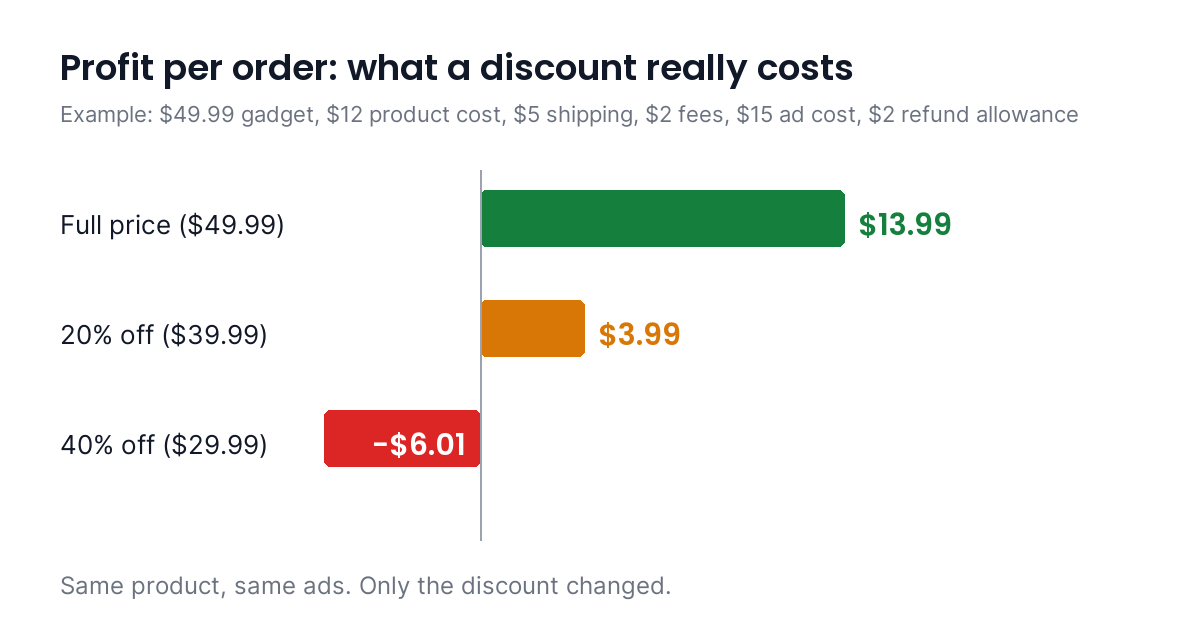
Say you sell a gadget for $49.99. It costs $12, shipping to the US is $5, payment and platform fees take about $2, and your ads usually bring in an order for $15. Subtract all that and you're left with $15.99 before refunds. Set aside $2 for the occasional return and you're at roughly $14 of real profit per order.
The discount question gets simple. A 20% discount takes $10 off the price, leaving you about $4 per order at the same ad cost. A 40% discount takes $20 and puts you underwater. A bundle of two for $79.99 doubles your product and refund costs, while shipping and ads barely change, so the bundle often earns more than the single-unit sale even though the customer feels they're getting a great deal. Do this math for your own products. It takes about ten minutes and decides your weekend.
Set a Target You Can Actually Measure
Before the sale week, define for yourself three numbers: the number of orders needed to make the sale week worth it, the cost per order you are willing to spend and the minimum profit per order you are willing to accept. Use this to score every decision you make during the sale week against the numbers you defined for yourself when you were calm and not frantically refreshing the dashboards.
Sanity-Check Demand Before You Commit
Margin math tells you what you can afford to spend. It does not tell you whether or not anyone will be interested in your product. Spend an hour onGoogle Trends comparing your candidate products and their main category terms over the last five years. You want two things: current demand and a pattern that repeats through December. A product that peaked in 2024 and has been flat since isn't a hero product. It's a leftover.
Note that Trends reports relative search interest only. Use it to compare candidates and time their launch, but for real cost and competition data, switch to the respective metrics.
Pick One to Three Hero Products
Small stores tend to lose Black Friday by discounting everything and learning nothing. Select one to three hero products instead: items that already convert, have margins worth protecting, and make sense in a five-second video. Let everything else ride along with a modest storewide offer.
No proven winner yet? Go for products with an obvious gift recipient, an easy demonstration, and a delivered cost that leaves room for a real discount. Tradelle's Hand-Picked Products can save you a lot of searching, since every pick comes with cost and saturation data attached. Which, conveniently, is exactly what week 1 is all about.
Week 2 (November 6 to 12): Fix the Pages You're Sending Traffic To
The amplification of all that is on your product page, good and bad, with paid traffic, means that by the time a sale actually starts, each of your hero product pages must answer the real questions that a gift buyer wants to know about your products before he buys them for someone else.
- When will it arrive? Give me a concrete delivery date for my region. “Fast shipping” tells me nothing.
- What’s in the box? List out the variants, sizes, and accessories included. Most returns come from surprised customers.
- Link to return policy, written in simple English and clearly formatted.
- Why that price? Show the original price next to the on sale price so the savings are clearly visible.
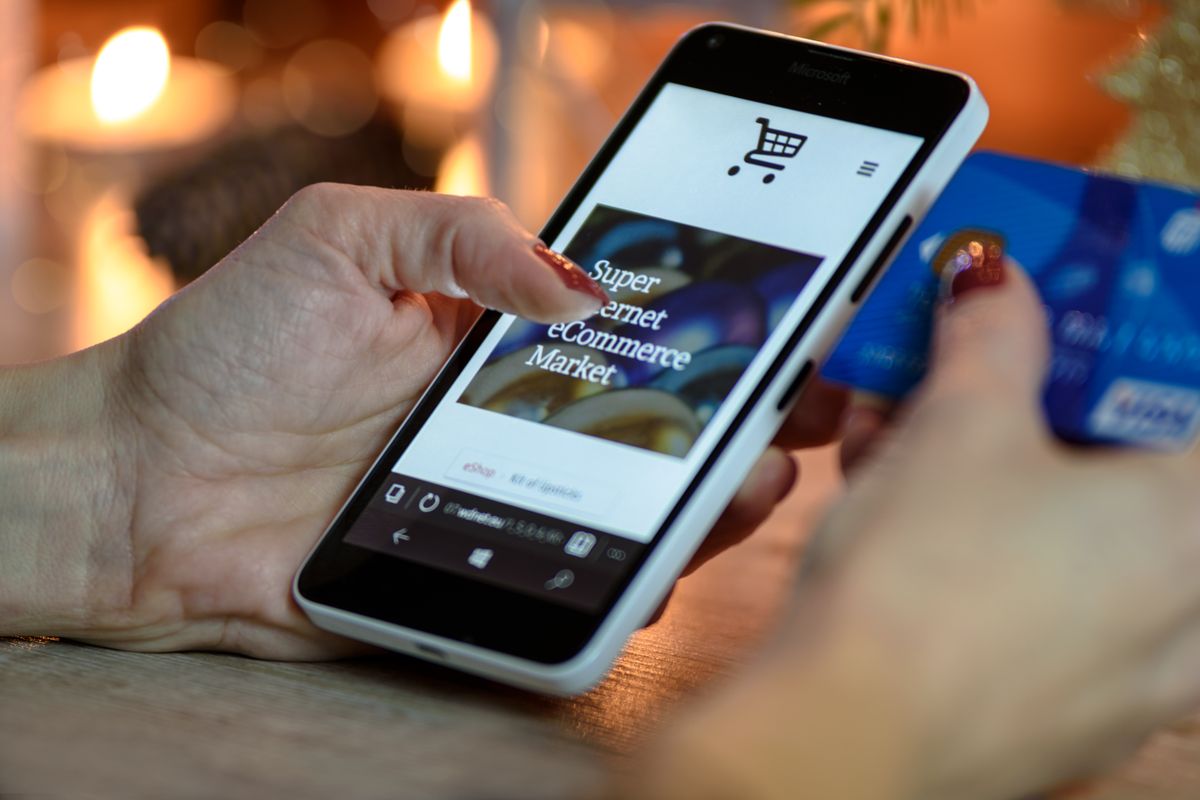
Use one hand and test the page out on your phone. Move the buy button up if it is below 3 screens of supplier copy. Also compress out any images that take too long to load. Again, traffic during BFCM is overwhelmingly mobile and does not have patience.
Choose Offers That Don't Eat Your Margin
A flat percentage off is the easiest offer to copy and the fastest way to kill your profit. Consider offers that raise the order value instead: two-item bundles, quantity breaks, a cheap freebie with purchase, or free shipping just above your current average order value. This Shopify Black Friday guide has more offer ideas if you need inspiration. Run each one through your week 1 math before committing to it.
Whatever you choose to communicate, make sure it can be read and understood in under three seconds. For example, ‘Buy 2, save 15%’ is fine. A tiered points system with a countdown and 5 conditions? No. Confused customers won’t ask questions during BFCM. They’ll leave.
Make Your Creative Now, Not on Black Friday
Aim for three to five short videos per hero product, each with a different hook: the demo, the gift reaction, the problem it solves, the unboxing. Stuck for ideas? The TikTok Creative Center shows top-performing ads by industry. Use it to prepare your “sale is live” and “last chance” versions this week. You won't have time to edit videos on Black Friday itself.
Set Up Your Emails While It's Still Quiet
Email is usually the highest-margin channel of the weekend, because subscribers cost you nothing to reach. Four emails cover most stores: a teaser early in sale week, the launch announcement Thursday evening or Friday morning, a reminder on Sunday, and a last-chance email on Cyber Monday. Write and schedule them now, and check that your signup form and abandoned-cart flow work before the crowds show up.
Give Past Customers and Warm Audiences Their Own Lane
Your cheapest BFCM order will be from a repeat customer. Set up your past customers as an early access offer to your store. Then create a retargeting audience of your most recent site visitors and your most recent cart abandoners before sale week. These people will be your most profitable orders when cold ad costs skyrocket on Black Friday. Make sure to exclude your most recent buyers from your “first order” discount offers. No one wants to feel like they’ve paid full price 2 days prior to BFCM.
Week 3 (November 13 to 19): Stress-Test Fulfillment and Support
This is the week most sellers skip. It's also the one that decides your reviews for the next three months. An order spike with shaky fulfillment doesn't just cost refunds. It produces the chargebacks and one-star reviews that follow your store into December.
Get Stock and Processing Times in Writing
Get current stock and realistic processing times from your supplier for sale week, then place one test order to your main market. If something can't ship inside your promised window, swap it out now. That's a lot easier than apologizing to 200 customers in December.
Additionally, ask what happens in the middle of the weekend when stock runs out. Can suppliers hold stock for you or recommend a suitable alternative. It’s amazing how one suppliers answer to this question can be the difference between you pausing an ad and receiving a mass of angry orders.

This is the core of what Tradelle was built for. With Fulfillment by Tradelle, sourcing, processing, and shipping are handled for you, and automaticTracking Number Updates keep your customers updated without you copying tracking codes at midnight. It matters most exactly when orders spike.
Prepare Support Before Your Inbox Explodes
Answer the five obvious questions first: where is my order, can I change the address, will it arrive before Christmas, how do I return this, and why doesn't the discount code work. Write the answers now. Our guides to managing returns and refunds and handling chargebacks walk through the two most expensive cases in detail.
Week 4 (November 20 to 26): Rehearse the Launch
No more planning. This week is a dress rehearsal:
- Place a test order online using your mobile phone and apply the discount code. Check the confirmation email sent to you.
- Verify that the sale price, compare-at price and countdown timer is displayed on every hero page.
- Just make sure that you are actually sending the abandoned-cart emails for carts that have been left abandoned. Enable them.
- Schedule launch emails and social media updates for Thursday evening and Friday morning.
- Set daily ad budget caps. Define a stop rule (e.g. cost per order) and stop running the campaign rather than ongoing optimization over the weekend.
If abandoned carts have haunted past campaigns, read up on these strategies for reducing abandoned carts before the traffic hits. Not after.
Have a Plan B for Every Hero Product
Things break during BFCM. A supplier runs out of stock, an ad account gets flagged, a discount code leaks to a coupon site and suddenly your margins are gone. Spend an hour writing down your response to each scenario before it happens: which backup product gets the budget, who you contact at the supplier, which campaigns you pause first. You probably won't need any of it. If you do, you'll handle it in minutes instead of improvising in front of a live audience.
The Weekend Itself: What to Do Each Day
- Friday check: spend, cost per order and site speed. Tweak anything that’s not working and leave the rest alone.
- On Saturday and Sunday allocate your remaining budget to products that have converted well on Friday. Keep an eye on your hero products’ stock levels.
- Cyber Monday: Change the message, not the whole campaign. Utilize last-chance pricing and communicate order by dates for holiday delivery.
- Make a note every evening of what has sold well, at what margin, using which creative. That list can then be used for the rest of Q4 and even next year.
Don't judge campaigns by Friday morning alone. Early-hour ad costs often look dismal until the day's conversions catch up. Give working campaigns room to breathe, and save your interventions for the ones clearly burning money past your stop rule.
Decide in advance who covers support over the weekend, even if that's just you checking the inbox three times a day. A customer who gets a helpful answer within an hour rarely turns into a chargeback. One who waits until Tuesday often does.
Five Mistakes That Ruin Otherwise Good BFCM Weekends
- First, don’t discount without doing the math. Offering a larger discount than what your margin will allow means you’re actually paying your customers to do business with you.
- Don’t launch a bunch of untested products with a lot of money behind them. BFCM is the most expensive form of traffic that you’ll get all year. Test small. Promote what already works.
- Hiding delivery times. Late gifts turn into refunds and chargebacks, no matter how good the deal was.
- Mid-weekend changes such as price, creative and audiences all mixed together at once will never reveal what actually worked.
- Forgetting existing customers. An early access email to past customers can outperform a cold campaign at a fraction of the cost.
After the Sale: Keep the Customers You Just Paid For
The weekend doesn’t end with the ads switching off. Get tracking updated as soon as possible and then ask for a review when the order arrives. Even a small online shop can get a second order in December from a single BFCM customer with the right email sent at the right time.
Allow for a returns wave to hit about 2 weeks later and budget for it. Just because someone is buying at a discount does not mean they are a ‘bad’ customer. Typically return rates on Gift Purchases are higher than on Personal Purchases. Deal with returns as quickly as possible and with as little conflict as possible. A returns disaster costs you one order, a returns nightmare costs you a lot more: the customer’s future orders, a poor review on the web and (possibly) a chargeback fee.
Review your notes from earlier as they are still fresh. Out of all the products that you sold, which one made money after you accounted for ads and refunds? Which creative generated the cheapest orders? Which supplier was the most reliable? Your store’s review is worth so much more than this guide.
FAQ: Black Friday & Cyber Monday Dropshipping
When should I start preparing for Black Friday?
8-12 weeks before you want to launch would be ideal to test products/suppliers but a focused 4-week plan is better than perfect plan that never gets started. Focus on a few hero products and complete the weeks in order.
How big should my Black Friday discount be?
As large as your numbers allow, not a percentage point bigger. While many stores offer 10% to 30% off their hero products, the number comes from your costs, your ad spend and your return rate, not from some banner on your competitor’s homepage.
How much should I budget for ads?
Only spend as much as you can afford to lose testing. Work out your acceptable cost per order in week 1 and use that to work out how many orders would make the weekend worthwhile. Then cap your spend there. Increase the budgets of campaigns that are performing well, not those where you’re desperately hoping they’ll turn around.
Is Cyber Monday any different for a dropshipping store?
Treating both days as one online campaign means that on Monday you can focus on last minute urgency and online-only deals rather than re-building the campaign from scratch.
How do I avoid shipping complaints during BFCM?
Confirm processing times before the sale, only promise what you can deliver, send tracking automatically, and answer “where is my order” fast. Most complaints come from silence and surprises, not from shipping speed itself.
Should I offer free shipping during BFCM?
If your margins allow it, a free-shipping threshold slightly above your average order value usually beats a straight discount, because it nudges people to add one more item. Just remember that “free” shipping is you paying the carrier. Include it in the week 1 math like any other cost.
Can I do BFCM with no audience and a brand-new store?
Yes, but keep expectations honest. Without an email list or past customers, everything depends on paid traffic at the most expensive time of year. Start with a small budget, one product, and one clear offer, and treat the weekend as paid market research as much as a sales event. The list and the reviews you build now are what make next year's BFCM cheaper.
What should I do right after Black Friday?
Keep the winners, drop the losers, and review margin per product instead of revenue. Then point the same pages and creative at Christmas delivery deadlines. Our Christmas 2026 product guide is the natural next read.
Final Thoughts
Black Friday rewards prepared stores, not just discounted ones. Four weeks is genuinely enough to pick profitable hero products, fix the pages buyers will judge, confirm fulfillment can take the hit, and rehearse your launch. Skip one of those and the weekend's revenue tends to vanish into refunds, wasted ad spend, and a support inbox you dread opening.
So start week 1 today: run the numbers, pick your heroes. And if you want product research with real cost and saturation data, plus fulfillment that's handled when the orders roll in, give Tradelle a look. It was built for exactly this kind of month.